With the in-depth popularization of 3D projection technology today, whether
a 3D projector can support rich 3D video formats directly determines the
integrity and convenience of the stereoscopic visual experience, and is also a
core indicator to distinguish high-quality equipment from ordinary products. An
excellent 3D projector not only needs strong projection performance and clear
picture presentation, but also needs to be compatible with mainstream 3D video
formats on the market, breaking format barriers, allowing users to easily play
various 3D content without complex conversion, and truly realize an immersive
experience of "play and enjoy immediately". The compatibility of 3D video
formats is not only related to the convenience of users, but also can maximize
the performance advantages of 3D projectors, accurately presenting every
stereoscopic detail, and becoming a key bridge between equipment and
high-quality content.
At present, there are many types of 3D video formats on the market.
Different formats correspond to different production standards, playback
scenarios and presentation effects. The core advantage of high-quality 3D
projectors is that they can fully compatible with various mainstream formats,
meeting the needs of home entertainment, business presentations, educational
training and other scenarios. Users do not need to manually convert formats,
avoiding problems such as playback failure and picture distortion caused by
format incompatibility. Mainstream 3D video formats are mainly divided into two
categories: frame-packed formats and line-interleaved formats. Among them,
frame-packed formats are mainly MKV, MP4 and AVI, and line-interleaved formats
are most commonly Side-by-Side (left-right format) and Top-Bottom (top-bottom
format). In addition, there are special formats such as Anaglyph (red-blue
format) to adapt to the needs of different scenarios.
Frame-packed format is currently the most mainstream and commonly used 3D
video format, and also the core compatibility focus of high-quality 3D
projectors. Among them, MKV format has become the first choice for home 3D
viewing due to its excellent compatibility and picture quality retention. MKV
format supports high-definition resolutions such as 4K and 1080P, which can
perfectly retain the stereoscopic layers and delicate details of 3D videos.
Whether it is color transition, picture sharpness, or stereoscopic immersion, it
can be presented to the extreme. Most 3D blockbusters and high-definition 3D
documentaries on the market are released in MKV format. High-quality 3D
projectors can not only smoothly play 3D videos in MKV format, but also
automatically identify the frame-packed structure, quickly parse the
stereoscopic information in the video, and with 3D glasses, can present a
realistic stereoscopic effect, allowing users to enjoy theater-level viewing
experience at home.
In addition to MKV format, the two frame-packed formats MP4 and AVI are
also widely used in various 3D content, becoming common choices for home and
small commercial scenarios. MP4 format is small in size and highly compatible,
suitable for storage in portable devices such as U disks and mobile hard drives,
making it convenient for users to copy and play at any time. It is especially
suitable for outdoor camping, small gatherings and other scenarios. With a
lightweight and compact 3D projector, you can quickly play 3D short videos, 3D
animations and other content without complex equipment. AVI format is famous for
its stability, which can adapt to various old equipment and playback software,
suitable for educational training, business presentations and other scenarios.
When playing 3D teaching courseware and 3D product demonstration videos, the
picture is smooth without freezing, which can accurately convey stereoscopic
information and improve the effect of demonstration and teaching.
As another major category of mainstream 3D video formats, line-interleaved
formats are mainly suitable for live broadcast, online playback, old 3D content
and other scenarios. Among them, Side-by-Side (left-right format) and Top-Bottom
(top-bottom format) are the most widely used. The left-right format places the
left and right viewing angle pictures of the 3D video side by side. During
playback, the 3D projector's decoding function separates and projects the two
viewing angles, and with 3D glasses, it can present a stereoscopic effect. This
format occupies less storage space, suitable for online playback, short video
platforms and other scenarios. Many 3D live broadcasts and 3D short videos adopt
this format. High-quality 3D projectors can decode quickly, avoiding picture
stretching and misalignment, and ensuring clear and realistic stereoscopic
effects.
The top-bottom format arranges the upper and lower viewing angle pictures
of the 3D video vertically. The decoding principle is similar to the left-right
format, but the picture utilization rate is higher, which can better retain the
clarity and details of the video. It is suitable for playing high-definition 3D
movies, 3D documentaries and other content, especially suitable for presentation
on large-size projection screens. With a 4K 3D projector, it can make the
stereoscopic layers more distinct and the picture details clear. In addition,
some 3D projectors also support the automatic conversion function of
line-interleaved formats, which can freely switch between left-right and
top-bottom formats, adapting to different playback devices and content sources,
further improving the convenience of use.
In addition to the mainstream frame-packed and line-interleaved formats,
high-quality 3D projectors also compatible with special 3D formats such as
Anaglyph (red-blue format) to meet the needs of more niche scenarios. The
red-blue format does not require professional 3D glasses, and only needs to wear
ordinary red-blue glasses to present a stereoscopic effect. The cost is low,
suitable for small-scale teaching, popular science demonstrations and other
scenarios. For example, in primary and secondary school science classes, playing
3D popular science videos, students can intuitively feel the stereoscopic
picture by wearing simple red-blue glasses, improving learning interest and
understanding efficiency. At the same time, some high-end 3D projectors also
support 3D Blu-ray format (BD-3D), which can directly play 3D Blu-ray discs,
restoring theater-level stereoscopic picture quality, meeting the high-end needs
of audio-visual enthusiasts.
It should be noted that the support of 3D projectors for 3D video formats
lies not only in the "number of compatible formats", but also in "decoding
efficiency" and "picture quality restoration". High-quality 3D projectors are
equipped with professional 3D decoding chips, which can quickly parse 3D videos
of various formats, avoiding problems such as playback freezes, picture
misalignment, and color distortion. At the same time, they can accurately
restore the stereoscopic layers and color details of the video, making the left
and right, upper and lower viewing angle pictures perfectly aligned, presenting
a realistic stereoscopic effect. Ordinary 3D projectors often have problems such
as incomplete format compatibility and slow decoding speed, such as being unable
to play 4K 3D videos in MKV format, or picture stretching when playing
left-right format videos, which seriously affects the user experience.
In different scenarios, the demand for 3D video formats is also different,
and the comprehensive compatibility of high-quality 3D projectors can perfectly
adapt to multi-scenario use. In home scenarios, compatible with MKV, MP4 and
other formats, it can meet the needs of users to watch 3D blockbusters, 3D
animations and 3D documentaries, no need to convert formats, copy and play
immediately; in commercial scenarios, compatible with AVI, left-right format,
etc., it can smoothly play 3D product demonstrations, 3D architectural models
and other content, improving communication efficiency and professional image; in
educational scenarios, compatible with red-blue format, top-bottom format, etc.,
it can adapt to 3D teaching courseware and popular science videos, making
teaching more intuitive and vivid.
With the continuous iteration of 3D technology, 3D video formats are also
constantly upgrading, from traditional standard-definition formats to today's 4K
and 8K high-definition formats, from single formats to diversified formats,
putting forward higher requirements for the compatibility of 3D projectors.
High-quality 3D projectors can not only be compatible with current mainstream
formats, but also support newly added 3D video formats in the future through
firmware upgrades, extending the service life of the equipment, allowing users
to enjoy high-quality stereoscopic visual experience for a long time. Whether it
is audio-visual enthusiasts, home users, business people or educators, choosing
a 3D projector with strong format compatibility can break format barriers,
unlock stereoscopic visual feasts anytime and anywhere, and make the 3D
experience more convenient and extreme.
From frame-packed to line-interleaved, from high-definition formats to
special formats, the comprehensive support of 3D projectors for 3D video formats
is the core guarantee for achieving high-quality stereoscopic visual experience.
It not only solves the pain points of users such as "incompatible formats and
troublesome playback", but also makes the dissemination and experience of 3D
content more convenient, promoting the popularization of 3D technology in home,
business, education and other fields. In the future, with the continuous
progress of technology, the format compatibility of 3D projectors will be
further improved, unlocking more high-quality 3D content, allowing stereoscopic
visual experience to enter more people's lives, bringing more realistic and
immersive sensory impact.
Read recommendations:
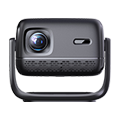
HN30B Portable - HN Series Projector
Can Projectors Connect to TV Set-Top Boxes
16G Projector Android System










 Reviewed: