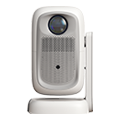
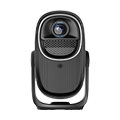
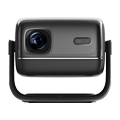
HN30A Portable - HN Series Projector

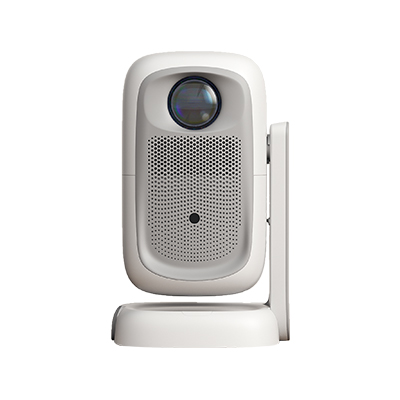
HN30B Portable - HN Series Projector


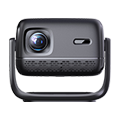
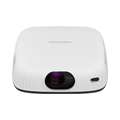
HW30 Home Cinema - HW Series Projector

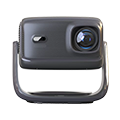
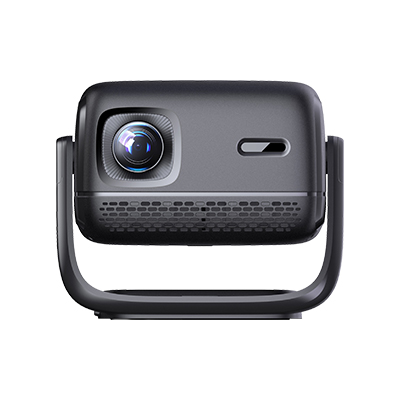
HW40 Home Cinema - HW Series Projector

HW45 Home Cinema - HW Series Projector


HI Gift Customization - HI Series Projector

A snowy screen with scattered white dots, flickering static, and blurry visuals is one of the most common projector malfunctions, which severely ruins viewing experience. This issue rarely occurs due to a single reason, and most cases stem from signal transmission failures, hardware connection problems, or minor internal component faults. Many users mistakenly believe the projector is broken immediately, but over 80% of snowy screen issues can be resolved through simple troubleshooting steps wit
View more
Incorrect color display is one of the most common issues with projectors, manifesting as distorted hues, excessive blue or yellow tones, faded colors, or inconsistent color saturation across the screen. This problem does not always stem from hardware failure; most minor color deviations can be resolved through simple debugging and environment adjustment. The first and most overlooked factor is the projection environment. Ambient light, especially strong natural sunlight or colored auxiliary ligh
View more

Projectors can technically cast images on glass surfaces, but the viewing effect is far from ideal for regular home and office use, and there are obvious limitations that users need to recognize. Glass is a smooth, transparent, and highly reflective surface, which lacks the matte texture and light diffusion ability of professional projector screens or white walls. When projecting on ordinary glass, most of the projected light will pass through the glass directly instead of being reflected back t
View more
It is technically feasible to use a projector as a temporary desk lamp in an emergency, yet it never serves as a qualified long-term replacement for a standard desk lamp, with fundamental differences in lighting principles, light characteristics and practical usage scenarios setting clear boundaries between the two lighting devices. A desk lamp is designed to emit concentrated, uniform directional light that directly illuminates the desktop, books and writing areas within a short distance. Its l
View more
When it comes to eye protection for daily viewing, projectors are widely recognized as a far better option than traditional and smart TVs, mainly due to their fundamental imaging principles. TVs adopt direct light imaging, which means the screen itself emits light directly into the human eyes. This active light source produces strong and concentrated brightness, and long-term staring will continuously stimulate the retina. Especially in dark environments, the high contrast between the bright TV
View more
Trapezoid distortion, also widely known as keystone distortion, is one of the most common visual problems projector users encounter in daily use. This issue occurs when the projected image appears as a trapezoid instead of a standard rectangle, with one side of the screen wider or narrower than the opposite side, which severely ruins viewing experience and affects image symmetry. The fundamental cause of this distortion is the misalignment between the projector lens and the projection screen. Wh
View more
Choosing the right projector screen size for a bedroom mainly depends on the bedroom’s square footage, wall space, and viewing distance, which directly determines the viewing comfort and visual experience. Unlike living rooms with ample space, bedrooms are usually compact, so oversized screens will cause visual fatigue, while undersized ones weaken the immersive home theater effect. The core principle is to match the screen size with the actual viewing distance from the bed to the projection wal
View more

Projectors are one of the most ideal devices for home movie viewing, far more immersive than traditional TVs for family cinema experiences. Unlike flat-screen TVs limited by fixed screen sizes, mainstream home projectors support adjustable projection sizes ranging from 40 inches to 200 inches. Users can cast images on white walls, dedicated projection screens or dark curtain surfaces without complicated installation. Modern consumer projectors are optimized for movie color rendering, covering hi
View more
Connecting Bluetooth headphones to a projector is an efficient way to enjoy private audio without disturbing others, which is ideal for night viewing, apartment home theater use and office silent presentation. Most modern smart projectors come with built-in Bluetooth modules, while traditional wired projectors need extra adapters to complete pairing, and the whole operation takes 2 to 5 minutes with no professional skills required.First, confirm the Bluetooth configuration mode of your projector
View more