2026.09.18
Portable Projector for Ceiling Projection Lying Down to Watch Dramas
![Portable Projector for Ceiling Projection Lying Down to Watch Dramas]()
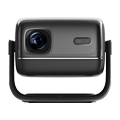
The portable projector supports flexible ceiling projection function, allowing users to lie flat on the bed or sofa to watch dramas, movies and videos easily, creating a comfortable home lazy viewing experience and subverting the traditional sitting and viewing mode. Traditional projectors can only project on vertical walls, requiring users to keep a fixed sitting posture, which is easy to cause physical fatigue after long-term viewing. The upgraded multi-angle projection technology of this proj
View more
2026.09.18
Mini Projector Supporting TF Card Direct Video Reading
![Mini Projector Supporting TF Card Direct Video Reading]()
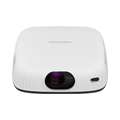
The mini portable projector is built with a TF card direct reading function, supporting direct playback of video, audio, picture and document files through TF memory card, realizing completely offline projection without mobile phone, computer and network equipment. This independent playback function solves the limitation that traditional projectors must rely on external equipment to play content, making the projector a standalone audio-visual playback device with more independent and convenient
View more
2026.09.17
auto-focus Projector custom
![auto-focus Projector custom]()
In projection engineering projects such as government and enterprise meeting rooms, campus teaching classrooms, commercial exhibition halls, hotel audio-visual spaces and commercial interior decoration, the core loss of most system integrators and purchasers does not lie in the price difference of equipment procurement, but in the hidden risks after project delivery. Ordinary conventional projectors without auto-focus function adopt fixed standard parameters and cannot adapt to customized proj
View more
2026.09.17
auto-keystone Projector OBM
![auto-keystone Projector OBM]()
In engineering projects such as smart meeting rooms, corporate exhibition halls, campus multimedia classrooms, commercial complexes and hotel multi-function halls, projectors are no longer independent display terminals, but core components within the complete audio and video integration system. What system integrators care most about is not merely the image quality parameters of the projector itself, but whether the equipment can be quickly integrated into the whole weak-current system, constr
View more
2026.09.17
Built-in Projector solution
![Built-in Projector solution]()
The long-term image stability, operation fluency, working condition durability and service life of embedded invisible projection products depend entirely on the overall hardware architecture and industrial-grade configuration standards, rather than merely external embedded installation appearance. Most low-end embedded projectors on the market only adopt simple embedded appearance modification with entry-level core hardware, resulting in inherent defects such as fast brightness attenuation, lo
View more
2026.09.17
Built-in Projector supplier
![Built-in Projector supplier]()
The core trend of modern audio-visual decoration, commercial space design, government and enterprise conference engineering and smart exhibition hall construction lies in visual minimalism, spatial integration and invisible equipment layout. Traditional vertical and exposed ceiling projectors have many shortcomings such as bulky appearance, messy wiring, damaged decoration texture and weak scene adaptability, which fail to meet the standards of high-end finishing, minimalist tooling and intell
View more
2026.09.17
Portable Projector with Built-in Tripod for No-installation Use
![Portable Projector with Built-in Tripod for No-installation Use]()
The portable projector integrated with a built-in tripod abandons the traditional split tripod design that needs separate carrying, assembly and fixation, realizing real-time no-installation projection and greatly simplifying the user’s operation process. Traditional projectors require users to carry additional tripods or placement brackets, which not only increases the carrying burden, but also requires tedious assembly, height adjustment and fixed placement before each use, wasting a lot of ti
View more
2026.09.17
Business Travel Portable Projector Under 500g Ultra-light Weight
![Business Travel Portable Projector Under 500g Ultra-light Weight]()
The ultra-light portable business projector with a weight of less than 500g is tailor-made for business travelers, office workers and mobile office groups, breaking the bulky and heavy inherent impression of traditional projectors. Compared with traditional office projectors which usually weigh 1-3kg and are difficult to carry, this 500g ultra-light design is equivalent to the weight of a mobile phone power bank, which can be easily held in one hand or put into a backpack, laptop bag and even a
View more
2026.09.16
1080P Projector Distributor
![1080P Projector Distributor]()
With the comprehensive HD upgrading of the home, commercial and educational projection markets, 720P low-definition devices are gradually phased out, while 4K projectors are limited by high costs and insufficient scenario adaptability. As mainstream and in-demand products in the current projection industry, 1080P projectors boast mature hardware configurations, ultimate high-definition image quality, strong scenario adaptability and outstanding cost performance. As a professional 1080P Project
View more
2026.09.16
ABS Projector Customization: Comprehensive Solutions to Standard Equipment Pain Points for Full-scenario Personalized Projection Needs
![ABS Projector Customization: Comprehensive Solutions to Standard Equipment Pain Points for Full-scenario Personalized Projection Needs]()
Mass-produced standard projectors generally suffer from poor structural adaptability, insufficient environmental resistance, weak brand recognition and low working condition matching, making it difficult to meet the differentiated needs of education, commercial, engineering, hotel and household scenarios. As a mainstream one-stop customized solution in the industry, ABS Projector Customization relies on the core material advantages of ABS engineering plastics including strong modifiability, st
View more
2026.09.16
customization ABS Projector
![customization ABS Projector]()
With the iterative upgrading of projection equipment, the body structure, optical adaptability and heat dissipation stability directly determine the imaging accuracy and long-term service life of projectors. Custom ABS projectors rely on the excellent physical properties of ABS engineering plastics, combined with professional customized design of optical structures, breaking the structural limitations of traditional mass-produced projectors. Through targeted structural optimization, optical ad
View more