2026.06.10
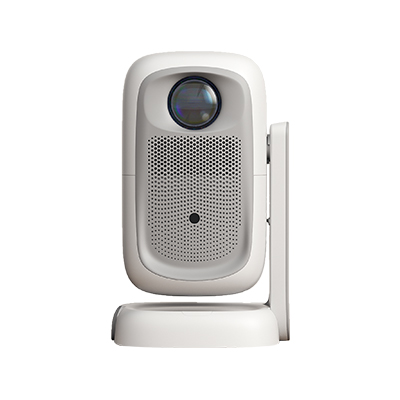
8G Built-in System Projector
![8G Built-in System Projector]()
With the rapid iteration of intelligent audio-visual equipment, a portable projector with solid performance and smooth operation has become a necessary device for home entertainment and small-scale office work. Featuring the core advantage of a built-in 8G large memory system, the 8G Built-in System Projector solves the pain points of traditional projectors such as stuttering, limited operation and single function, bringing users an all-round upgraded audio-visual and usage experience, and red
View more
2026.06.10
Projector Quality Performance Analysis
![Projector Quality Performance Analysis]()
The overall quality of a projector is comprehensively determined by core hardware configuration, manufacturing process, material quality, and service life, and high-quality projectors can maintain stable and excellent performance in long-term use. First of all, the core quality indicators focus on light source performance and resolution, which directly determine the projection effect. High-quality projectors adopt mature LED, laser or hybrid light sources, with high brightness uniformity and low
View more
2026.06.10
Common Application Scenarios of Projectors
![Common Application Scenarios of Projectors]()
Projectors have a wide range of application scenarios, covering household entertainment, commercial office, education and teaching, and professional public display fields, meeting the large-screen display needs of different groups. In household scenarios, projectors have become the core equipment of home theaters, replacing traditional TVs to create an immersive viewing experience. Families can use projectors to watch movies, TV dramas and live sports events, and the large-screen picture of up t
View more
2026.06.10
Basic Technical and Usage Requirements of Projectors
![Basic Technical and Usage Requirements of Projectors]()
The basic requirements for projectors cover environmental conditions, power supply matching, placement norms and daily use specifications, which are the key to ensuring stable projection effect and prolonging equipment service life. In terms of use environment, projectors have certain requirements for light and space. Although modern projectors have anti-light performance, long-term use in strong direct sunlight will still reduce picture clarity and accelerate light source attenuation. Therefore
View more
2026.06.09
16G Projector for Office
![16G Projector for Office]()
16G Projector for Office is a professional projection device adapted to modern diversified office scenarios, widely used in daily office reports, staff training, business negotiations, small meetings, home office and other scenarios. Office projection equipment needs to meet the requirements of high-frequency, long-term and regular power-on use. Heat dissipation performance is the core factor that determines the operational stability, service life and picture effect of projectors. Ordinary off
View more
2026.06.09
16G Projector for Meeting Room
![16G Projector for Meeting Room]()
16G Projector for Meeting Room is a professional office projection device specially designed for regular office work, high-frequency meetings, and long-term presentations in enterprise meeting rooms. As the core scenario for daily enterprise communication, business negotiation, staff training, project discussion and investment promotion, meeting rooms impose extremely high requirements on the continuous working capability, operational stability and fault tolerance of projection equipment. Whet
View more
2026.06.09
16G Projector for Presentation
![16G Projector for Presentation]()
16G Projector for Presentation is a professional projection device specially designed for office scenarios such as business meetings, academic reports, enterprise presentations and product displays. Different from ordinary home projectors, this device takes 16G large capacity as its core hardware advantage, targeting and solving industry pain points in business presentations such as stuttering, loading delay, program crash and failed multi-task operation, making it a core device for efficient
View more
2026.06.09
16G Projector for Party
![16G Projector for Party]()
16G Projector for Party is a core audio-visual device for current home gatherings, outdoor parties, themed team building, festival parties and other scenarios. Relying on the hardware advantage of 16G large memory, it completely solves the pain points of traditional projectors such as stuttering, crash, slow loading and limited resources, and is specially designed for various party entertainment scenarios. Different from office and teaching dedicated projectors, party scenarios have higher req
View more