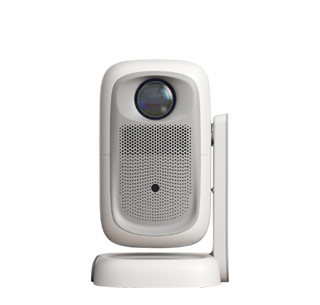
High Contrast 3color laser Projector for Cinema Experience
In the evolution of cinematic presentation technology, the pursuit of
immersive visual experience has always been the core driving force for
technological innovation. The high-contrast three-color laser projector, as a
disruptive product in the field of cinema projection, breaks through the
technical bottlenecks of traditional projection equipment and redefines the
professional standard of cinematic visual presentation with its leading
three-color laser light source technology and ultra-high contrast performance.
This article will deeply dissect the technical connotation, core advantages and
industry value of this projector, revealing how it injects new vitality into the
modern cinema experience.
1. Core Technical Architecture: Three-Color Laser Light Source as the Core
Driving Force
The fundamental difference between the high-contrast three-color laser
projector and traditional bulb projectors or single-color laser projectors lies
in its advanced three-color laser light source system. The projector adopts red,
green and blue (RGB) monochromatic laser diodes as the light-emitting core,
abandoning the color wheel color separation technology used in traditional
projectors and the phosphor conversion technology in single-color laser
projectors. This direct RGB laser light-emitting mode has inherent technical
advantages in color reproduction and light control.
In terms of light source design, the three-color laser system realizes
precise control of light intensity and wavelength through semiconductor laser
technology. Each color channel (R/G/B) can be independently modulated with a
modulation frequency up to 100kHz, which ensures that the color transition is
smooth and free of color breakage even in high-speed dynamic images. At the same
time, the laser light source has a narrow spectral line width, with the full
width at half maximum (FWHM) of each color channel less than 5nm, which is far
superior to the 20-30nm of traditional bulb light sources. This narrow spectral
characteristic makes the color gamut coverage of the projector reach more than
95% of the DCI-P3 cinema standard, and even can cover the wider Rec.2020 color
gamut, perfectly restoring the color details designed by the film creator.
In addition, the laser light source has excellent stability and long
service life. The average working life of the core laser diode can reach 20,000
hours, which is 4-5 times that of traditional cinema bulb light sources. This
not only reduces the maintenance cost of cinemas (such as frequent bulb
replacement) but also ensures the consistency of image quality during long-term
operation, avoiding the problem of color fading and brightness attenuation of
bulb light sources after long-term use.
2. Ultra-High Contrast Technology: Reconstructing the Hierarchy of Light
and Shadow
Contrast is one of the key indicators affecting the cinematic visual
experience, directly determining the expression of image details in bright and
dark areas. The high-contrast three-color laser projector achieves ultra-high
dynamic contrast (up to 1,000,000:1) through the combination of multiple
technical means, breaking through the contrast limit of traditional projection
equipment (usually 20,000-50,000:1).
Firstly, the laser light source's inherent high directionality and high
energy density lay the foundation for high contrast. Unlike the divergent light
of bulb light sources, laser light has a small divergence angle (less than
1mrad), which can be precisely focused on the DLP chip or LCoS panel, reducing
light scattering and leakage. Secondly, the projector adopts an advanced dynamic
light control system, which realizes pixel-level light intensity adjustment
through the combination of digital micromirror device (DMD) high-speed switching
technology and laser modulation technology. For dark scenes in the film, the
system can reduce the light output of the corresponding pixel area to near zero,
while maintaining high brightness in bright areas, thus forming a strong
contrast between light and dark.
In addition, the projector is equipped with a high-gain anti-light screen
matching technology. The screen adopts a micro-nano structure design, which can
effectively enhance the reflection efficiency of the projected light and
suppress the interference of ambient light. Even in cinemas with slight ambient
light leakage, it can still maintain excellent contrast performance, ensuring
that the audience can perceive the delicate light and shadow details in the
film, such as the dark texture of night scenes and the layered details of bright
scenes.
3. Technical Advantages Matching Cinema Scenarios: Immersive Experience
Upgrade
In addition to the core advantages of color and contrast, the high-contrast
three-color laser projector also has a number of technical characteristics
tailored for cinema application scenarios, further enhancing the immersive
experience of the audience.
In terms of brightness performance, the projector can achieve a maximum
brightness of 30,000 lumens (based on DCI standard) through the combination of
multi-laser array technology and light-gathering optical system. This brightness
level is fully applicable to large-format cinema halls (such as IMAX halls with
a screen width of more than 20 meters), ensuring that every corner of the screen
has uniform brightness and no dark corners. At the same time, the brightness can
be adjusted in multiple gears according to the size of the cinema hall and the
type of film, balancing the viewing experience and energy consumption.
In terms of image clarity, the projector supports 4K resolution (3840×2160)
and 120Hz high refresh rate. The 4K resolution ensures that the image details
are sharp and delicate, and the texture of characters' expressions, the texture
of scenes and other details can be clearly presented; the 120Hz high refresh
rate effectively solves the problem of motion blur in high-speed dynamic scenes
(such as car chases, action fights), making the image movement more smooth and
natural. In addition, the projector is equipped with an advanced image
processing chip, which supports HDR10+ and Dolby Vision cinema standards,
further enhancing the dynamic range of the image and making the color expression
more hierarchical.
In terms of system stability and compatibility, the projector adopts a
modular design, which is convenient for maintenance and upgrading. It supports a
variety of cinema signal interfaces (such as DCP, HDMI 2.1) and is fully
compatible with the existing cinema playback system. At the same time, the
projector is equipped with an intelligent temperature control system, which
effectively dissipates the heat generated by the laser light source through a
multi-channel heat dissipation structure, ensuring stable operation even in
long-term continuous playback (such as 12 hours a day).
4. Industry Value and Future Development Trend
The popularization and application of high-contrast three-color laser
projectors are of great significance to the cinema industry. On the one hand, it
improves the core competitiveness of cinemas. In the context of the increasing
popularity of home projection and large-screen TVs, the ultra-high-quality
visual experience brought by three-color laser projection has become a key
factor for cinemas to attract audiences and realize differentiated competition.
On the other hand, it promotes the innovation and development of film creation.
The wide color gamut and high contrast performance of three-color laser
projectors allow film creators to give full play to their creative imagination,
use more complex color schemes and light and shadow expressions, and enrich the
artistic connotation of films.
Looking to the future, the high-contrast three-color laser projector will
develop in the direction of higher resolution (such as 8K), higher brightness,
and smarter integration. With the continuous progress of laser technology, the
cost of three-color laser light sources will gradually decrease, which will
promote the popularization of this technology in medium and small-sized cinemas.
At the same time, the integration of AI technology will make the projector have
more intelligent functions, such as automatic adjustment of image parameters
according to the content of the film, intelligent recognition and suppression of
ambient light interference, etc., further optimizing the viewing experience.
Conclusion
The high-contrast three-color laser projector, with its leading three-color
laser light source technology, ultra-high contrast performance and a series of
cinema-adapted technical advantages, has become a new benchmark for modern
cinema projection technology. It not only redefines the visual experience of
cinemas but also injects new impetus into the high-quality development of the
cinema industry. With the continuous advancement of technology, it is believed
that this projector will play a more important role in the future cinema market,
bringing more shocking and immersive visual feasts to global audiences.
Read recommendations:
HN30B Portable - HN Series Projector
outdoor Projector Distributor
Projectors Supporting Multi - Screen Interaction Functionality













 Reviewed: