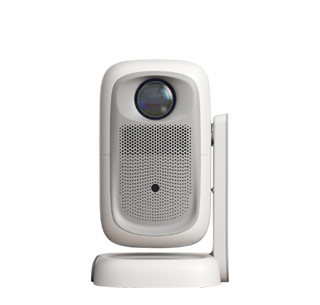
A good heat dissipation projector is a projection device engineered with advanced cooling systems to effectively manage and dissipate heat generated during operation—preventing overheating, maintaining stable performance, and extending the lifespan of internal components. Unlike projectors with poor heat dissipation (which may experience brightness degradation, frequent shutdowns, or component failure due to excess heat), these models are designed to handle heat efficiently, making them ideal for extended use scenarios like marathon movie nights, all-day business presentations, or classroom lectures.
The core technology behind a good heat dissipation projector includes a multi-layered cooling system. First, high-efficiency heat sinks—made of aluminum or copper (materials with excellent thermal conductivity)—are attached to heat-generating components like the light source, chipset, and power supply. These heat sinks absorb heat and spread it over a large surface area, accelerating heat loss. Second, optimized fan systems use multiple fans (often 2–3) with aerodynamic blade designs and variable speed control. The fans pull cool air into the projector, direct it over the heat sinks, and expel hot air through strategically placed vents. Variable speed control adjusts fan speed based on temperature—running slower during low-heat operation (to reduce noise) and faster when heat increases (to boost cooling). Third, thermal channels—internal air ducts that guide airflow through the projector—ensure that cool air reaches all hot components, preventing “hot spots” that can damage parts. Some advanced models also use heat pipes—hollow tubes filled with a heat-conducting fluid—that transfer heat from high-temperature components to heat sinks without using moving parts, enhancing cooling efficiency while reducing noise.
Key advantages of good heat dissipation projectors are performance stability and longevity. Even during 8+ hours of continuous use, the projector maintains consistent brightness and color accuracy, with no dimming or color shifts caused by overheating. The risk of sudden shutdowns (a common issue with overheated projectors) is minimized, ensuring uninterrupted presentations or movie viewings. Additionally, effective heat dissipation extends the lifespan of critical components: the light source (LED or laser) lasts 20%–30% longer, and the chipset and power supply are less likely to fail prematurely. For example, a projector with good heat dissipation may have a light source lifespan of 30,000 hours, compared to 20,000 hours for a model with poor cooling.
Practical applications of good heat dissipation projectors focus on extended use. In home theaters, a model with efficient cooling allows for back-to-back movie screenings without performance issues, perfect for weekend film marathons. In conference rooms, it ensures all-day business meetings with continuous presentation display, avoiding disruptions from overheating. In classrooms, it handles daily 6–8 hours of use for lectures and educational videos, reducing maintenance needs for school IT teams. Additionally, good heat dissipation is crucial for projectors used in warm environments (like unairconditioned rooms or semi-outdoor spaces), where high ambient temperatures increase the risk of overheating. While projectors with advanced cooling systems may be slightly larger than compact models, their reliability and extended lifespan make them a worthwhile investment. For anyone needing a projector that performs consistently during long periods of use, a good heat dissipation projector is the optimal choice.
Read recommendations:
HW45 Home Cinema - HW Series Projector
500ANSI Projector solution
3d Projector ceiling mount compatible














 Reviewed: